
When to End Your Session at LuckyWins Casino
Last Updated on September 24, 2026
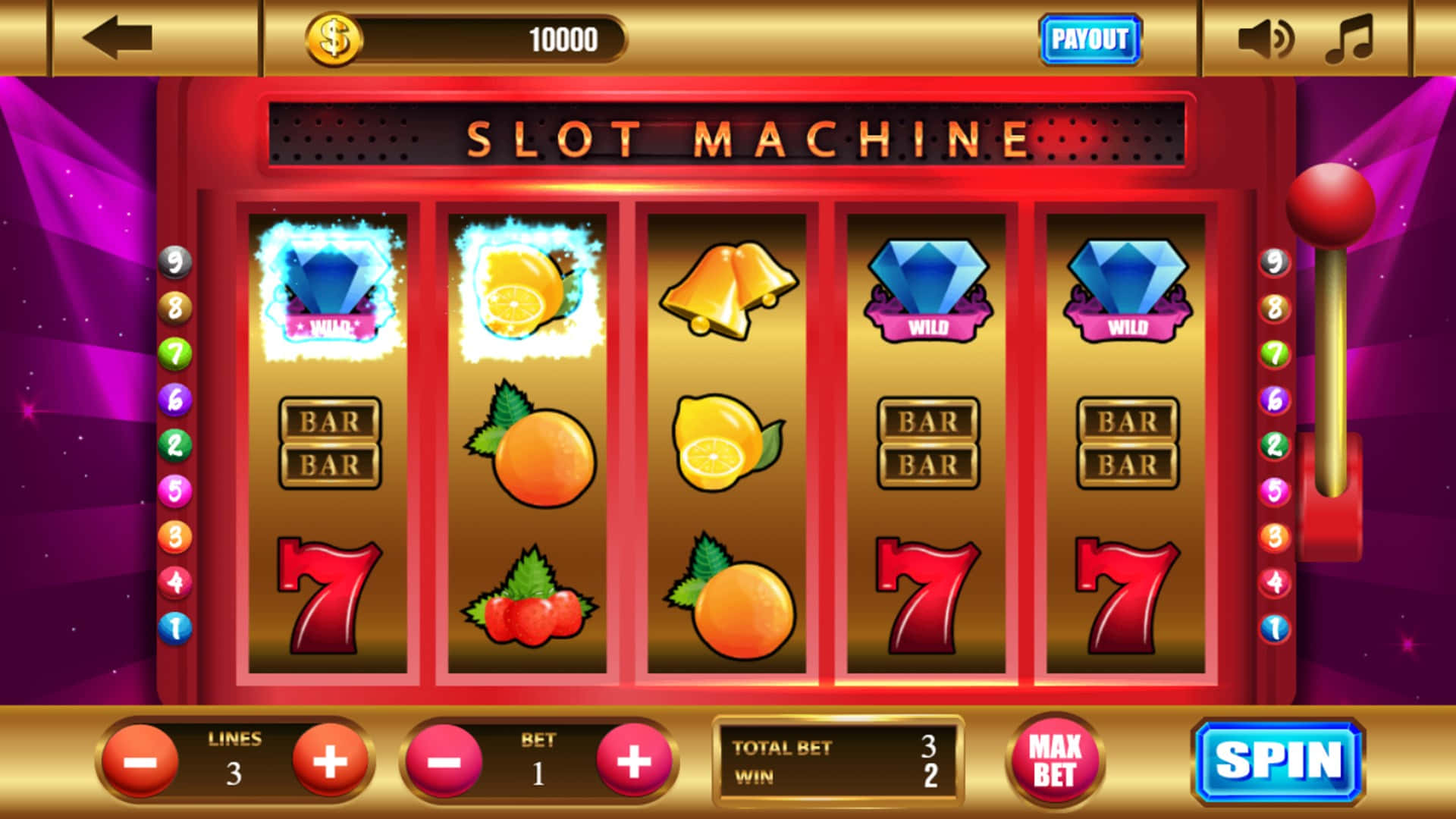
We have all felt that thrilling moment when a session at LuckyWins Casino feels like it stretches time itself, obscuring the line between entertainment and compulsion https://luckyspins-casino.eu.com/. As analytical reviewers, we handle this not as moral judges but as practical strategists who recognise that the true skill in gaming comes down to the exit. The platform provides a polished, immersive experience with its vibrant pokies and live dealer tables, yet the most valuable tool at your disposal is the ability to recognise when the mathematical and psychological tides have turned. Walking away at the right moment safeguards your bankroll, hones your future decision-making, and secures the experience remains exactly what it should be: a recreational pursuit. This guide is our deep dive into the signals, strategies, and self-awareness checkpoints that show you it is time to log off.
Establishing Time Limits Ahead of You Log On
We have found that the single most powerful pre-commitment strategy is a strict temporal boundary established before you even encounter the lobby at LuckyWins Casino. The platform’s immersive interface, with its seamless navigation and constant visual feedback, is designed to dissolve your awareness of the clock. Without a predetermined finish line, a planned thirty-minute session can seamlessly morph into a three-hour marathon. We recommend using an external timer, not just the site’s own reminders, because the act of physically setting an alarm on your phone creates a psychological contract. When that alarm sounds, view it as a non-negotiable circuit breaker. This discipline stops you from slipping into the hazy state where decisions become reactive. Time limits safeguard the quality of your play and ensure you leave with your analytical faculties intact, regardless of the balance in your account.
Bankroll Administration: The Financial Stop-Signal
We approach bankroll management as anything but a vague suggestion but instead as a rigid structural framework that defines your exit point at LuckyWins Casino. Before a single spin, you need to segment your disposable income into a session budget that you are entirely comfortable losing. This loss limit is your ultimate stop-signal, and it must be a concrete figure, not a flexible range. We have seen that players who set a “rough limit” of, say, 100 to 200 dollars will almost always rationalise hitting the upper bound and then extending it. Write the number down. When your balance hits zero for that session, the decision is made for you. Equally important is a win limit. A common analytical error is giving back a substantial profit to the house. If you have doubled your session bankroll, that is a mathematically sound moment to stop and withdraw, converting a statistical anomaly into a tangible victory.
Recognizing Your Personal ‘Why’ for Gambling
In the end, the most powerful stop-signal stems from an honest audit of your drive for visiting LuckyWins Casino. We ask players to differentiate between playing for fun and spinning for income. If you sign in because you have a spare moment, you love the visuals, the sound design, and the social aspect of live dealer chat, you are connecting with the platform as a leisure product. If you access the site because you require to pay a expense, you have crossed into a territory where no analytical approach can rescue you. We regard the point you view a casino account as a financial fix rather than a result in a round as the critical moment to stop entirely and seek a new kind of support. Your ‘why’ should be anchored in leisure. When the motive changes to need, escape, or desperation, the play should never commence, let alone go on.
Detecting the Signs of Falling Returns
Every round at LuckyWins Casino, from the elaborate bonus rounds of a new pokie to a traditional blackjack hand, operates on a principle of reducing marginal utility over prolonged play. We observe this occurrence when the original thrill of a small win no longer registers, and you realize you are increasing bet sizes just to feel the same dopamine spike. The games are built with a house edge that builds over time, meaning that statistically, the longer you play, the closer your results will mirror that built-in advantage. A tangible sign is when you stop celebrating modest returns and concentrate solely on a massive jackpot. If you observe that a 20-dollar win feels like a loss because it did not compensate for your previous stake, your perception has changed dangerously. That emotional flatness is a definite analytical marker to stop.

When Victory Signals a Caution
Curiously, a major winning streak at LuckyWins Casino can be equally dangerous a signal to stop as a losing one. We term this the “invincibility fallacy,” where a streak of positive variance convinces a player to believe that they possess a exceptional skill or a hot hand in a game controlled by a Random Number Generator. This overconfidence leads to sloppy play, larger bets, and a disregard of the precise limits that safeguarded your bankroll in the first place. We have witnessed substantial withdrawals reversed in a matter of minutes because the winner believed they were playing with “house money.” From an analytical perspective, money in your account is your money, regardless of its source. If you observe thoughts like “I cannot lose tonight” sneaking in, you are in a cognitive danger zone. Secure the win, log out, and enjoy the satisfaction of a session where you surpassed the statistical expectation.
The Significance of Taking Structured Breaks
Continuous play dulls the analytical edge you need to take sound decisions at LuckyWins Casino. We highly recommend for structured breaks, not merely between sessions but inside them. A five-minute pause every hour, in which you rise, hydrate, and turn away from the screen, restores your cognitive arousal levels. The platform’s fast-paced nature, especially in auto-spin pokies or rapid roulette rounds, may trigger a trance-like state of continuous partial attention. In this state, your perception of time and money warps. We utilize these breaks to pose ourselves a simple question: “Am I still playing for fun, or am I betting to fix something?” If the answer inclines toward the latter, the break ought to be a permanent stop for the day. These micro-pauses are your defense against the hypnotic rhythm of the reels and the cards.
Understanding the Purpose of the House Edge
To know when to stop, we must first acknowledge the immutable mathematics governing every offering at LuckyWins Casino. The house edge is not a punitive measure but a statistical certainty that secures the operator’s longevity, and it works quietly on every spin and every hand. As analytical reviewers, we observe players often misinterpret variance, mistaking a short-term hot streak for a defiance of this edge. The truth is that the edge expresses itself over thousands of rounds, not dozens. If you have been playing for an prolonged period and your balance is slowly chipping downward, that is the edge appearing in real time. Recognising this is not pessimistic; it is insight. The moment you understand that no amount of strategy in a game of pure chance can indefinitely reverse this tide, you gain the awareness needed to stop before the statistical gravity pulls you into a significant loss.
The manner in which Alcohol and Fatigue Influence Decision-Making
We have to tackle the frequently ignored biological factors that weaken your stop mechanism at LuckyWins Casino. en.wikipedia.org Alcohol and fatigue are powerful disinhibitors that straight impair the frontal lobe, the exact region you rely on for impulse control and risk assessment. A late-night session after a few drinks may feel like a relaxing wind-down, but analytically, it is a recipe for broken limits and fierce chasing. We have tracked numerous sessions where the most significant losses occurred not due to bad luck, but due to the player’s chemically diminished capacity to simply walk away. Our practical rule is stark: if you would not drive a car in your current state, do not log into your casino account. Tiredness has a similar subtler effect, slowing your reaction to loss-limit triggers. Treat sleep and sobriety as crucial components of your gaming strategy, because a clear mind is the only mind that can determine when to stop.
Utilizing LuckyWins Casino’s Responsible Gaming Tools
As hands-on reviewers, we examine the system a platform offers for self-regulation, and LuckyWins Casino offers a suite of tools that we consider essential. Deposit limits, reality checks, and self-exclusion options are not just business formalities; they are your built-in stop-switches. We suggest setting a daily deposit limit that aligns with your pre-determined bankroll, even if you believe you can afford more. The reality check function, which shows your session duration and net position at intervals, functions as an unbiased observer that breaks through the individual fog of play. If you discover yourself consistently ignoring these pop-ups or raising your limits, that behaviour itself is a critical warning sign that you have misplaced perspective. We view the self-exclusion tool as a effective circuit breaker for anyone who struggles to uphold their own boundaries, giving a compulsory cooling-off period that recalibrates your relationship with the platform.
The Mental Snare of Chasing Losses
Pursuing lost funds is the most harmful behavioural loop we see in the online casino environment, and LuckyWins Casino’s rapid deposit mechanisms, while convenient, can accelerate this trap. The psychological pain of a loss often provokes an irrational urgency to restore your balance immediately. We see players increase their wager sizes dramatically, forsaking their initial unit betting strategy in a desperate sprint to break even. This emotional state disables the prefrontal cortex, the part of your brain handling rational cost-benefit analysis. A clear signal to stop is the thought, “I just need to win back what I lost, then I will quit.” That sentence is a lie your limbic system communicates you. We recommend you to treat every deposit as a sunk cost the moment it leaves your bank account. If you experience that hot surge of frustration, close the tab immediately and return only after a full night’s sleep.
Learning from Your Gaming History
A systematic review of your financial and gameplay history at LuckyWins Casino delivers a data-driven mirror that feelings often evade. We recommend a weekly audit where you compute your net position, not just in financial terms but in time spent. Look for trends: do your losses concentrate around late-night hours? Do your deposits jump on weekends? This analytical approach changes abstract feelings into solid data points. If you notice a consistent trend of going beyond your limits or a slow, steady drain over the month, that is impartial evidence that your current stop strategies are not working. We use this history to modify future limits downward, not upward. The numbers do not deceive, and they can be the eye-opening wake-up call that a gut feeling cannot offer. Let the ledger be your guide, and when it shows a pattern of poor exits, reinforce your pre-commitment rules immediately.
Leaving Tactics for a Positive Gaming Relationship
We present the act of stopping not as an end to fun but as a tactical move that protects the long-term sustainability of your hobby at LuckyWins Casino. An effective exit strategy includes a cool-down ritual. After a session, we recommend closing the browser and immediately participating in a completely different activity, such as a walk or a conversation, to break the mental loop. This prevents the “just one more deposit” temptation that persists in the minutes after logging out. We also encourage celebrating your stops. If you walked away because your loss limit was hit, you won the discipline game. If you stopped because your timer went off, you mastered time. By reframing the stop as a victory, you build a positive feedback loop that boosts your self-control. A healthy relationship with this platform is defined not by how long you play, but by how cleanly you can walk away.

Category
Recent Posts
Jocurile de Noroc la Casino Monte Carlo
Auto-generated excerptView more »Jocurile de Noroc la Casino Monte Carlo
Auto-generated excerptView more »How to Move a Piano: Special Equipment and Professional Help
Moving a piano is a significant undertaking that requires careful planning, specialized equipment, and often, alaskamovingnetwork.com professional assistance. Pianos are …View more »